Thursday, February 09, 2006

My Birthday!!!


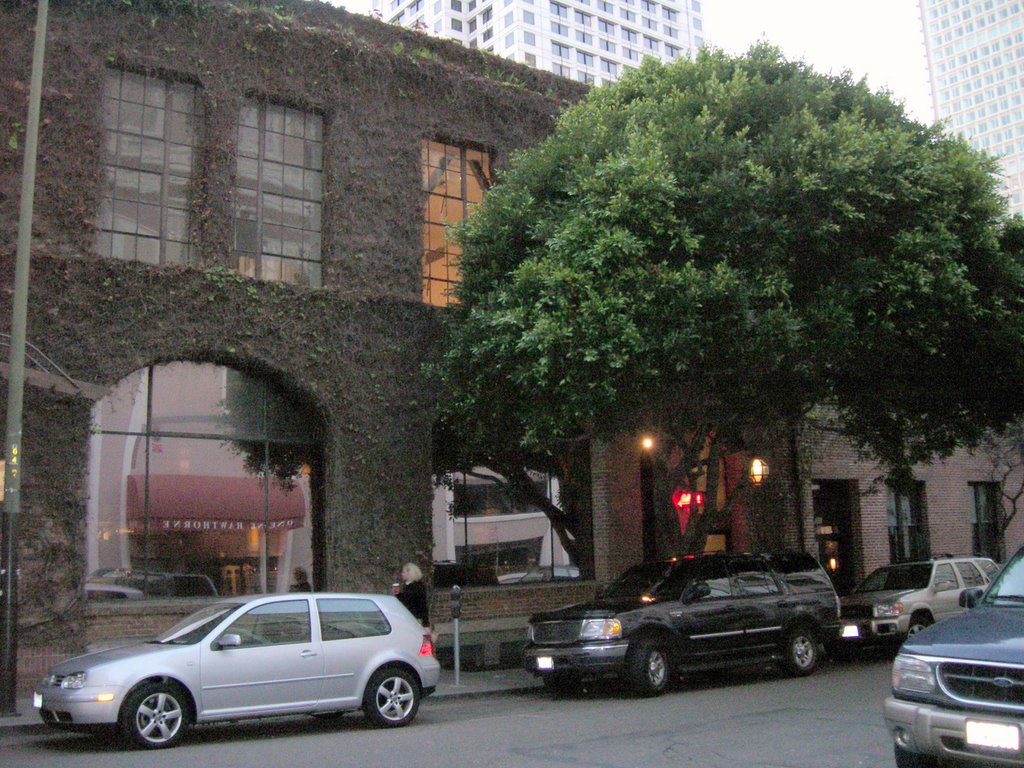
I had the best birthday this year. I got many cards in the mail, a package, e-mails, and a sweet e-card from Nels (thanks Nels). Today being the printfreak that I am, I decided to hit the printshops in San Francisco. The weather was beautiful 72degrees and sunny (my favorite temp.). The first printshop that I visited was Aurobora Press. I didn’t know anything about the press, and was anxious to visit it for the first time. One of my favorite things in the whole world is to go printshop hunting. For reasons unknown to me, printshops tend to be tucked away in the most inconspicuous places and Aurobora Press was no exception. I knew it was behind the SFMOMA, but for the life of me I couldn’t find it. I finally did of course. The inside of the printshop was beautiful. It had tall ceilings, great natural light, and beautiful brick walls. I was blown away by the monoprints (yes, Prof J- MONOPRINTS!!!). They were beautiful. Aurobora specializes in monoprints. I was looking around when I found a very large monoprint that was very familiar looking. As I was looking at this print, a man popped his head around the wall and asked if I had any questions. I asked him if this print was Kurt Kemps. He said yes and are you one of his students. I went onto explain to him that Prof. Joel and Kurt Kemp went to the University of Iowa together. Apparently, Kurt Kemp is one of the artists that helped him open up the printshop. He became interested in me and asked if I wanted to tour the workshop. I was so happy. This guy was so friendly and down to earth. Most printshops in SF area are very cold, and business like. I was very impressed with the workshop. There was loads of room, yet it was cozy. I just felt very inspired in the space. The guy who I was talking to was Michael Liener. He runs the printshop, but he has a master printmaker who works with the artists and teaches the workshops. He began explaining to me that he has to find a new master printer, and is in the process of trying to find one. It made me wish that I knew monoprint a lot better because I would have loved to work there. I just loved everything about the printshop. I looked a bit closer at the prints, and then I realized that I liked these print a lot better then any of the prints I saw at Crown Point Press and Paulson Press. I went on to tell Michael that these prints impressed me because I could see the artists’ hand. I continued by saying that places like Crown Point Press ask artists to visit for a few weeks, take a crash course in etching, and have these technically amazing prints. Well, any printer knows that it takes years and years to learn the techniques. I think I have talked about this before, but it does upset me knowing that master printers have done most of the technical, and problem solving work. There is nothing wrong with that, but the “real” printmakers who are trying to promote their work have less of a chance if artists are taking over the galleries. Prof. J raised the issue to me one time, and at the time I didn’t have much of an opinion, but now I understand what he was talking about. The idea of artists coming to work on monotypes is exciting. Not only does it allow them to be creative without worrying too much about technique, but it gives them a small step in learning about the printmaking process which in turn will further their curiosity about printmaking. Hey, we all like people who become more enlightened about printmaking no matter where that inspiration comes from. So, I hope to go back to the printshop more frequently to see what’s going on.

Sunday, January 29, 2006

Harlan & Weaver

“Felix Harlan and Carol Weaver met as young printers at a print workshop in downtown Manhattan. When it closed, the couple founded their own printshop with a rented press, inherited equipment, and a desire to push traditional techniques to meet the needs of contemporary artists. Now celebrating its twentieth anniversary, Harlan & Weaver is a well-respected specialty workshop where some of the best-known young and established contemporary artists makes prints, using a variety of intaglio techniques.
-Merrily Kerr


In Decembers 2005 Art on Paper, there is an interview Merrily Kerr had with printmakers Felix Harlan and Carol Weaver. Harlan and Weaver met each other in 1980 at Aeropress under Patricia Branstad who was Kathan Brown’s assistant at Crown Point Press. Harlan and Weaver later decided that they wanted to open their own small printshop in the lower east side of New York. At first they rented a press and printed with Jeryl Parker who had unconventional approaches to printmaking. Along with Parkers friends, they also became friends with several artists in the east village who introduced them to other artists. Soon they started getting jobs of their own despite the downturn in the market. Today is a very productive time in printmaking in New York, especially for etching. There has been a shift in taste on the part of people who are buying prints and in curatorial interests in small-specialized printshops. It was believed that printshops should be large and offer every technique possible. Harlan feels a kinship with other printers in New York and around the country because of this shift.
When Harlan and Weaver were young they felt a need to learn all printmaking techniques, but they became focused on more traditional intaglio techniques. They seldom use photo-processes or handwork after printing. The emphasis is more on what one can do to the plate. They enjoy working with artists who haven’t been published as well as more experienced artists such as Kiki Smith, Richard Artschwager, and Louis Bourgeois. Right now they so contract work but hope in the future to publish more.
- My abstract from Art on Paper Nov/Dec 2005

I thought this interview was so interesting. I was inspired to read that small-specialized printshops are becoming popular in New York since this is my plan for the future. It’s also exciting that etchings are becoming more desired by buyers. Hopefully, what is going on in New York will impact the rest of the country. This article also makes me think about what Harlem and Weaver said about wanting to learn all the techniques while they were young. I could relate to it because I feel like I wanted to learn every medium and technique while I was at CCA. Now, I’m rethinking this unrealistic goal and feel like it is important to master in a certain medium, and also have some experience and respect for other techniques.

Thursday, January 26, 2006

Henry Darger


Another artist I admire is Henry Darger. A lot has been written about him lately because he has been an underated artist. Now he is starting to become more recognized in the art world. I love the way he has created an imagined world full of very serious content.

Henry Darger (April 12?, 1892–April 13, 1973) was a reclusive American writer and illustrator who worked as a janitor in the Chicago, Illinois area. His major claim to fame is a 15,000-page fantasy manuscript called The Story of the Vivian Girls, in What is known as the Realms of the Unreal, of the Glandeco-Angelinnian War Storm, Caused by the Child Slave Rebellion, along with several thousand watercolor paintings and other drawings illustrating the story. Darger's work has become one of the most notable examples of outsider art.

For more information click here: Henry Darger


So, maybe I'm a bit slow, but I have just found out about wikipedia. It's a complete encyclopedia of any information you could ever imagine and it's controlled by you and anybody. I guess I did hear of it a few months ago after the hurricane Katrina disaster, but I wasn't sure what it was. It's such a great resource.

Sunday, January 22, 2006

techs

Lithography

Non-Toxic Lithography
Waterless Lithography
Polyester plate Lithography


Intaglio

Non-Toxic Etching
Acrylic Resist Etching: Edinburgh
Waterbased inks: Akua

Acid Free Non Toxic Etching
Galv-etch/electroetch
Electroetch

What she be do?


I was walking down Denny Street in Tralee when I saw a sign that said Wellspring Gallery Contemporary Irish Art. I thought, well, I might as well check it out. I had to go down the steps into the basement of a three story house. I rang the bell, and after a while a woman with wild blond hair opened the door. She welcomed me and quickly ran off to the back yelling "I'll have tu find yu a brochure of the exhibit". I heard all this shuffling and crashing, "I'll have to print yu a new one: seems's though i've run out."
"That's fine" I yelled.
"Give us a shout if yu got any questions."
As expected, irish landscape paintings were on show. I was impressed with the gallery; it was professional enough and had great lighting." I walked through and there was a chair with some prints on it. I thought oh, I'll look through these. On closer inspection I noticed that they were actually fine art prints. My eyes light up and I quickly ran over to the woman.
"Hello, I noticed you have some prints."
She pulled herself out from under a table and gave me a suspicious look, "what kind of prints?"
"Etchings and monoprints." I was thinking are you mad don't you know what's in your own gallery?
Her eyes then light up "yes!!! She quickly pulled me over to her collection, and proceeded to tell me about how she was a printmaker and these prints were a collection from the graphic studio in Dublin, and the Cork Printshop. I continued to tell her that this is my first contact with prints in Tralee (my home town), and the frustrations I've been having trying to explain to my family what I was doing. After I said that, it was smooth sailing. We had made a connection, and her speech became rapid almost manic. I'd never smiled so much I was absolutley amused by this woman. She continued showing me her favorite prints and asked me "arn't these just luscious; don't you just want to eat them, they're so seductive." I thought I would be witnessing that famous seen from When Harry Met Sally with the way she was talking. I thought to myself 'what happened to my passion...I new exactly how she felt, but I had not felt that way in years.' Suddenly, I felt excited, I felt as if I had a mission. Tralee is the perfect town to have a printshop. During my whole stay in Ireland, I bonded very deeply with my family. All of a sudden my role in my family is not of a child, but now I have become a diplomat between the strange relationships the members of my family have with each other. Since my parents immigrated back to Ireland, I've felt like an outsider and America has suddenly become an empty place. I feel like in order to make my life work the way that will make me happy, I'll have to split my time between living here and living there. I need to make America a home, but I know that my real home is always there for me with my family. It's sad to say goodbye to my grandparents not knowing if I'll ever see them again, or to see my sisters growing up so fast. It's really weird the way time plays with ones mind especially when you are an immigrant. So, my plans have changed a little. I feel like if I open just a little printshop like the one Nick has in Barga, and spend the summers there teaching workshops while renting it out during the year to artists. I still have a lot to think about, and probably won't look into again until after I get my MFA, but knowing that that dream is there makes me happy.


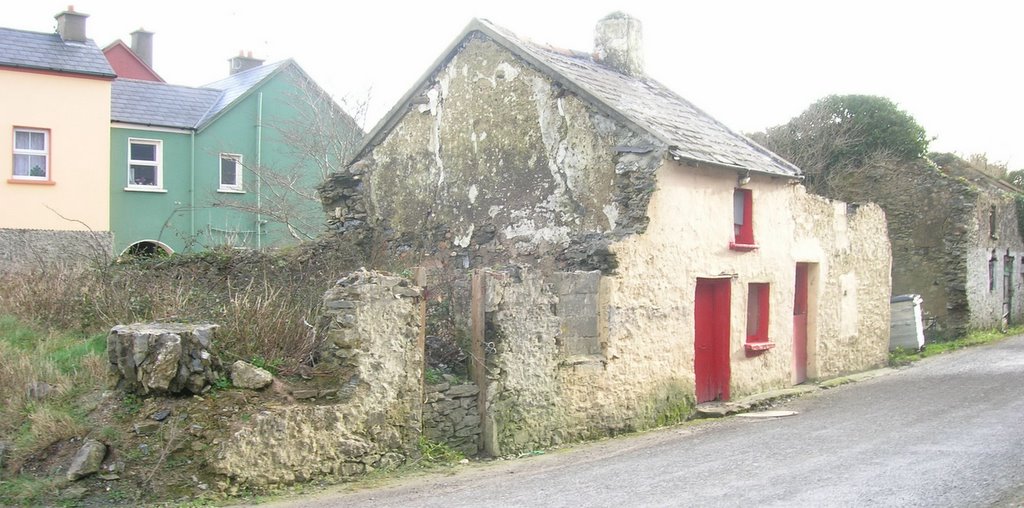
A old man with a hump came out of this house, hopped onto his tractor and drove away.


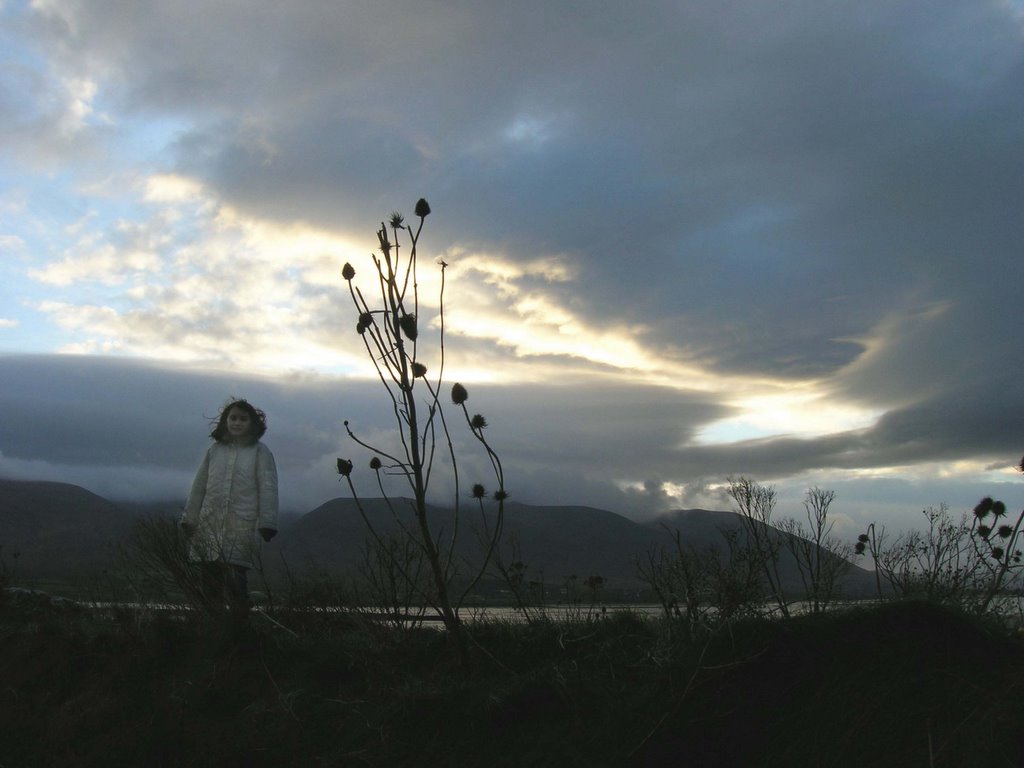
The whole family together for Christmas. The first one in twelve years.


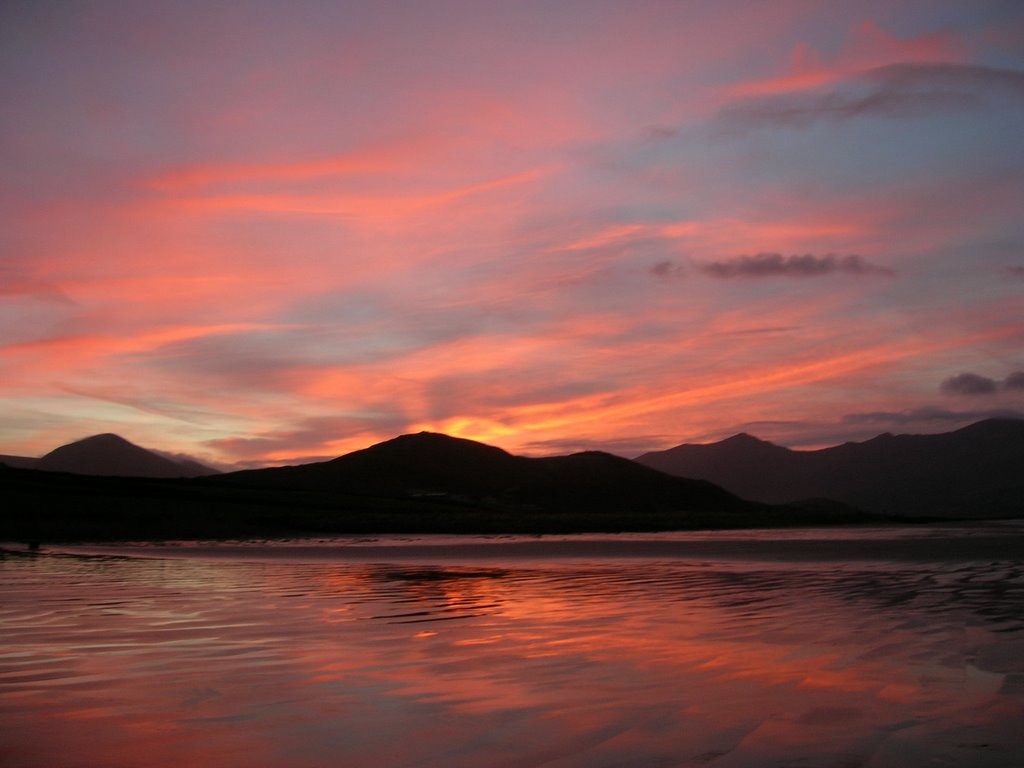
I'm a bit biased, but the Tralee Bay is just the most beautiful place.

Monday, December 12, 2005

I'm OFF!!!


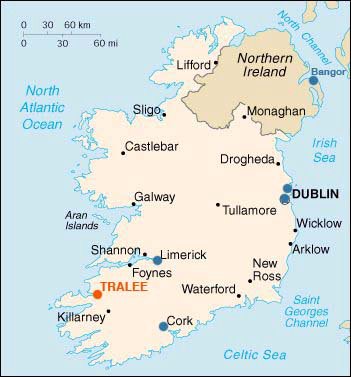
In just a few hours, I'll be leaving for the airport. Above is a map of where I'm going. Tralee in the lower left, in red, is where I'll be. It's nestled right in the bay, so it is sure to be very cold there. The blue dots are all the printshops that I know of in Ireland. I might find out that there are more.

I'll be gone for a month, and I'm not sure what kind of access I will have for the internet. The internet cafe's are very expensive, but maybe I'll sneak into the library every now and then.

I'm taking a lot of books with me, and a sketch book too, so I'm hoping something will come to me while I'm there. I watched the Magdalene Sisters for the first time the other night, and it just ignited a rushing river of images in my head. It seems that I should tap into this subject matter more since it had such an impact on me.

So Merry Christmas, Happy Holidays, to you all!!!

Sunday, December 11, 2005

Cork Printmakers


So, this guy in the foreground is someone I have to meet. Anyone with crazy-cool hair is an automatic atraction magnet for me. Cork is about two hours away from where I'll be in Ireland, so I must also check out this print shop. My brother is applying to UC-Cork, so we'll have to spend a few days together checking out this city. I'm interested in how this printshop integrates classes into the community.

Cork Printmakers are committed to promoting print as a public art form. We provide a professional, open access, fine art print workshop so as to facilitate printmakers and visual artists working through the medium of print. A range of presses, tools, equipment and materials, required to produce a body of work, are available to members.

As well as supporting artists, Cork Printmakers has a substantial role to play in the community. Public engagement is very important and so the workshop is very active in the exhibition of print in public and private spaces and embraces critical response. In addition, we offer the most comprehensive range of printmaking courses for adults in the country and through our artists in schools programme, which won an AIB Better Ireland Award, we bring the art of printmaking to children between the ages of six and eighteen, across all social backgrounds.

Crown Point Press


Last week I visited the Crown Point PressWinter exhibit. I didn't realize that the printshop was just around the corner from the SFMOMA, so I stopped by to take a peek. I was so ecxited because Crown Point Press has such a great reputatioin. A lot of famous artists go to crown point press to turn their work into intaglio prints. I wasn't particularily drawn to anything I saw, but It was pretty exciting being there. There were tons and tons of drawers with past porfolios in them. If you ask them to look at the prints, they give you pretty white gloves to flip through the prints. I asked to get a tour of the printshop, but the tour guide was busy. The woman told me to come back during the week when I can actually see people pulling prints off the press. That's extremely exciting. I kind of sneeked into the printshop anyways, and it seemed so huge. I'll have to go back after I get back from Ireland, and get a better view.

Crown Point began in 1962 as a print workshop, but started publishing prints in 1965 with etching porfolios by Richard Diebenkorn and Wayne Thiebaud. It functioned as both workshop and publisher until 1971 when Brown formed an alliance with the New York publisher, Parasol Press. In that year Crown Point Press moved from Brown's Berkeley basement to a loft space in downtown Oakland, and --through Parasol Press-- began working with New York artists Sol LeWitt, Brice Marden, and others who would later be seen as key members of the Minimal art movement.In 1977 Crown Point Press shifted its emphasis back to its own publishing program, and began working with a group of mainly Conceptual artists including Vito Acconci, Chris Burden, Tom Marioni, John Cage, and Pat Steir. Artists published by Crown Point since that time represent a wide variety of contemporary art approaches, and many of them live in countries other than the United States. Art historian Susan Tallman in her 1996 book, The Contemporary Print, describes Crown Point as "the most instrumental American printshop in the revival of etching as a medium of serious art." From 1982 through 1994 Crown Point added Asian woodcut techniques to its etching program, taking artists to Japan, and later China, to work with craftsmen in those countries. ince 1986 Crown Point Press has been located in San Francisco, where it has a gallery open to the public and two large etching studios. With a staff of twelve, the press currently publishes etchings by five or six invited artists a year. It also holds summer workshops open to all artists.

I'll really want to take a summer workshop next summer, so hopefully the classes will not be full.

Thursday, December 01, 2005

My friends

Here are a couple links to my friends at CCA. Both Weston and Michelle were in my class. I'm kind of sad that I don't get to see them much. Michelle is in the printmaking program and we had studios next to each other. We shared a bathroom and kept booze in the shower. It's amazing to see how their work has progressed in the past semester. I really need to crack the whip on myself. As soon as I get back from Ireland, I'm going to have to fully submerge myself into producing art. I've spend the last few months researching, sketching, thinking, but I now need to take all that is within myself and explode onto paper. I really need to get stuff done, and push myself more. I was looking back on my sketch books from the beginning of my grad experience and have realized how much my mind has grown, and my artistic sense has grown. I feel a lot more confident about contemporary art. I feel like I understand things a lot more now, and wont feel like an ousider. I'll be ready to go back as long as I make work!

WestonTeruya


Michelle Carlson

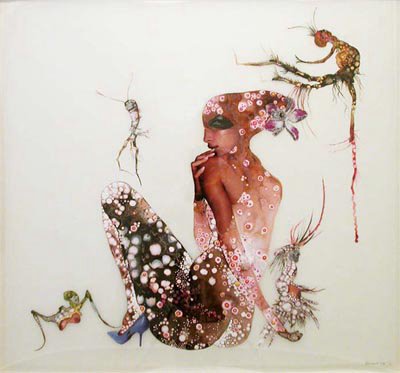
Wangechi Mutu

Another one of my favorite artists is coming to the San francisco MOMA. I am absolutley curious to see her work in person. I've been told that I should encorporate collage into my printmaking, but I'm never satisfied with the way it looks. Wangechi Mutu uses a lot of collage in her work succesfully. Her work is jewels for my eyes, and curiosity for my brain.


Friday, December 16, 2005 - Sunday, April 02, 2006

Wangechi Mutu, a Kenyan-born artist based in New York, makes luscious yet unsettling pictures of female figures. Her painted and collaged works on Mylar function as potent social critique while simultaneously exploring more poetic strains of mythology and allegory as well as the sensuousness of form, color, and pattern. Particularly interested in myths about gender and ethnicity that have long circulated in Africa and the West, Mutu has adopted the medium of collage — which by its nature evokes rupture and collision — to depict the monstrous, the exotic, and the feminine. Her exhibition at SFMOMA combines works on paper and a site-specific installation.