Sunday, October 15, 2006

James Ensor


"Death Chasing a Flock of Mortals"
etching and drypoint
1896

James Ensor (1860-1949) Lifetime achivement of 133 etchings.

There was an interesting article in recent Art on Paper magazine about Tom Firmans 200 piece collection of Ensor prints. Tom first saw Ensors famous painting "Christ's entry into Brussels in 1889 and became thoroughly impressed by the artist. Later in New York he bought his first prints, by Gabor Peterdi who taught at Yale and was the author of "Great Prints of the World" Through Peterdi , Firman learned that prints provide an economical means to collect the work of as many of the worlds greatest artists. At first Firman was attracted to the fantasical qualities of Ensors etchings, but later began to appreciate Ensors keen sense of draftsmanship. His favorite print is a hand colored version of "Skeletons Trying to Warm Themselves". Ensor used this print to wrap the etching plate when it was not in use. Firman owns five etchings from Ensor's 1904 album "The Seven Deadly Sins". I remember that "Whipping Boy" did the seven deadly sins series as an undergrad.


Depraivity and corruption are timeless and for Ensor, humor provided the best means to face the dark side of human condition. It was this intensely pessimistic if ultimately realistic world view, expressed in a series of astonishing paintings and etchings, which made Ensor a pariah during his productive years as an artist, rejected not only by the right-thinking Flemish burghers of his native Belgium, but also by the members of Les Vingt, the avant garde group of painters of which he, himself, was founder and leading light.

Thursday, October 12, 2006

Open print studio in Emeryville, CA

I got a recent email from Linda Goodman who wants to open up her studio to experienced printmakers. If you are interested just leave a comment and I'll get you in touch with her.

I am trying to get the word out to artists I have
enjoyed working with that I am opening my
Emeryville, California, etching and litho studio to
experienced printmakers or those seeking instruction with
ample open studio. I wanted to make sure that you know
about this.

My preference is to find about three other
artists to work in the studio. Available 24/7 (altho we may
stagger use.) I will be moving into a different
studio for painting etc and using this one only for
printing occasionally and possibly a few print workshops.
You may also use the studio for some photography,
drawing and/or painting if that works out. Some storage
is available. Frestanding Ettan Press, bed size 36" x 72".
Fuchs and Lang hand litho press, bed size 23 x 36". And
of course my sinks, water bins and some inking and
other tables (as desired).

The studio will be available probably
about Nov 1 or possibly sooner.

First Prints

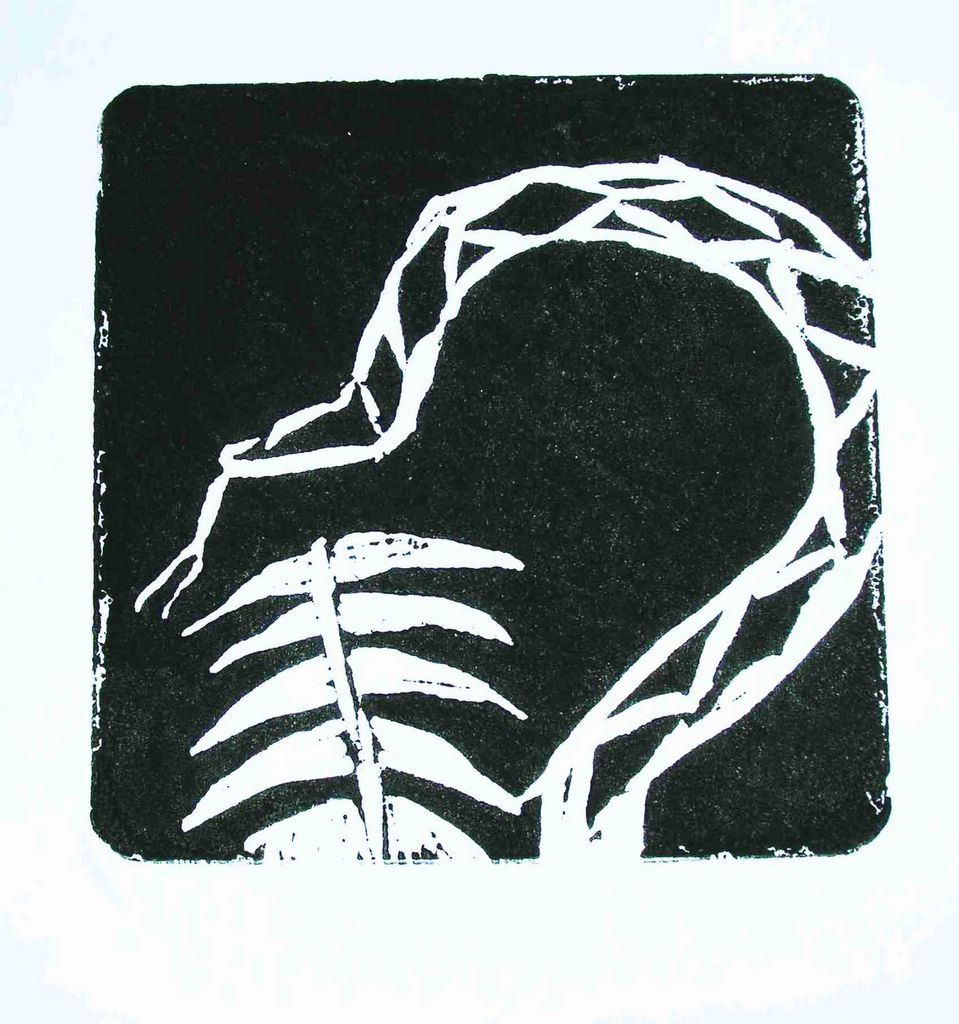
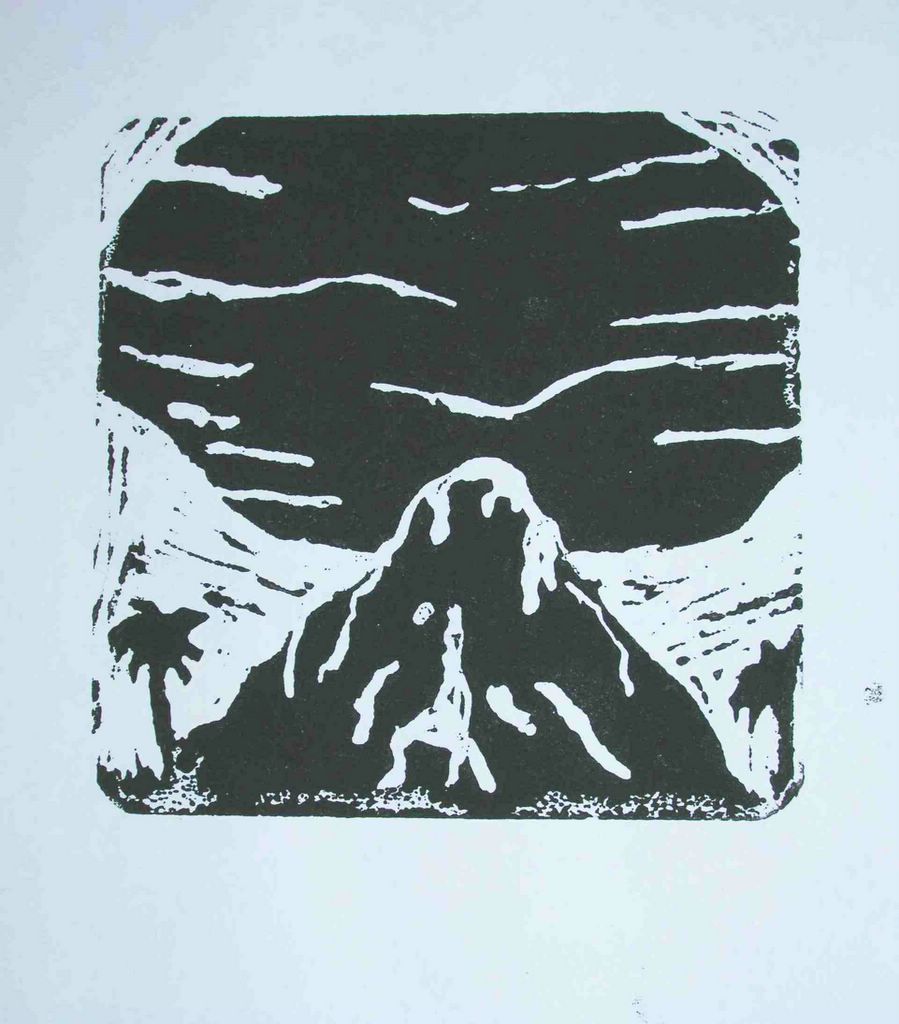
I forgot to share with you some prints that my little sisters did. Last time I was home I taught my little sisters how to do woodblock printing. It was really fun to see what their reation would be to a process like this. My older sister (13), who is very much like me, loved carving the wood, and she carved a lot of woodcuts, but when it came to printing she wasn't all that excited. Infact she didn't print a lot of them. My younger sister(9), is happy go lucky type of person, and thoroughly enjoyed both processes, but I think she enjoyed printing the best. She became very experimental during the printing process. It was so much fun teaching them woodcut. I think it is something all kids should learn how to do.

No blood involved in these prints


Erin


Michelle

Monday, October 09, 2006

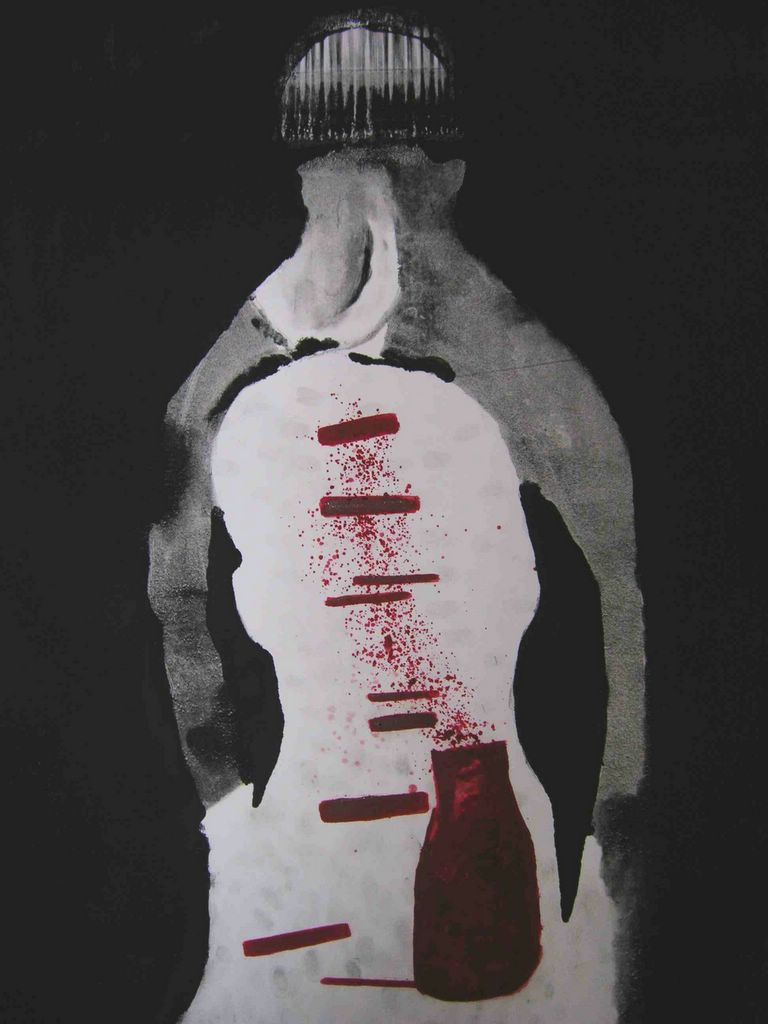
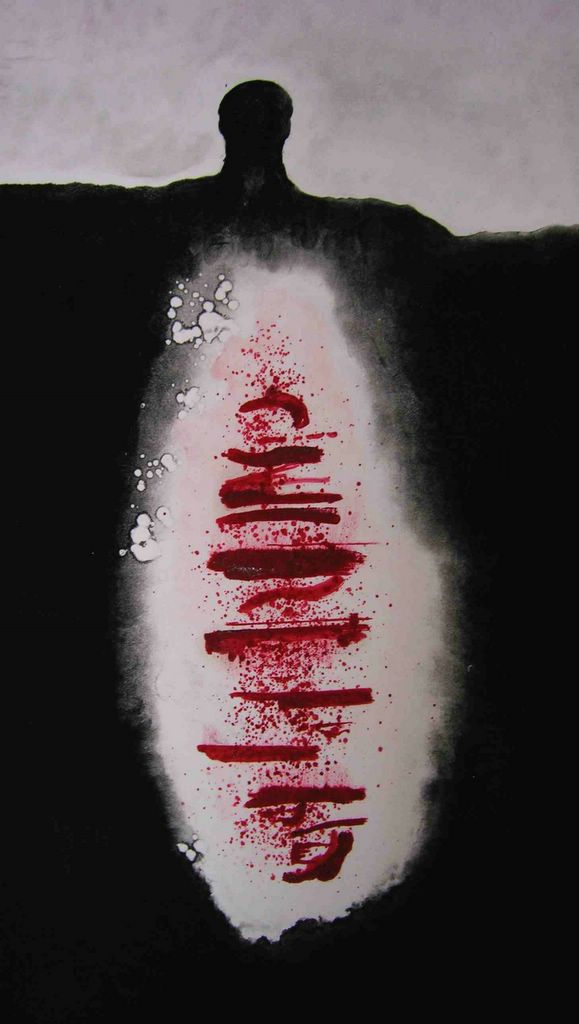
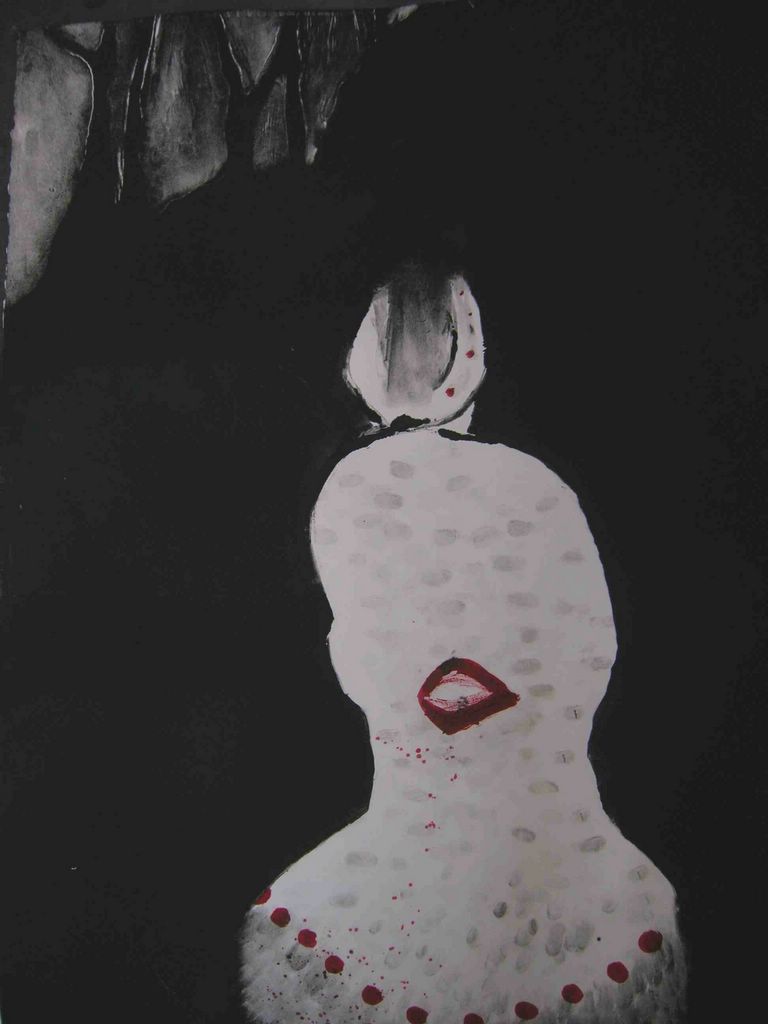
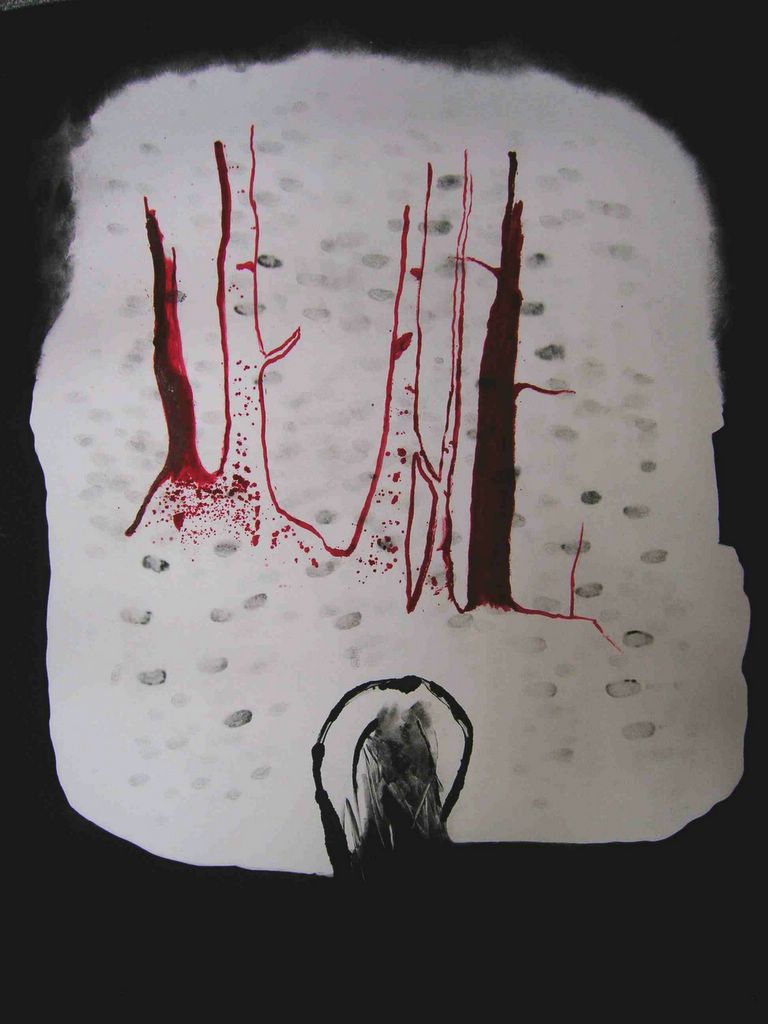
New (mono)Prints

Recently I opened up my charcoal box. I have not opened it since December 2003; the last time I had a drawing class with Joel. I smelled the inside and all of a sudden a wave of old memories came back. I grabbed a stick and put it to paper. A wave of euphoria came over me and I quickly sketched the first four prints below. It felt so good. I only have one stick of charcoal left, so next time I go back to LaCrosse, I'll have to get some new charcoal blessed.

So, below are some new prints. They make me nervous and I think that is probably a good thing. I don't understand them yet, but I'm sure I will soon.

What do ya think?


Thursday, October 05, 2006

Poems

I've started to write poetry lately. One because of my bookmaking/letterpress class and two because it seems to aid in making my art work. I've been thinking a lot lately about how artists create their art. What is their inspiraton and how do they execute it. It is always different for everybody, but it occurs to me that most people these days have a system of rules that they work off of. I seem to wing it most of the time. Ever since starting graduate school it seems as though I'm supposed to have already worked out a system that works for me, and a system that makes logical theoretical sense. Well, I did that in Greece and produced some prints that on the one hand were fun yet on another hand are totally boring. We spent half an hour last week looking at a students project where she creates scribbles. It's all systemetically in order, but it is so boring. Can you believe that we spent such a long time talking about scribbles? It drives me nuts. Then after her, we went and talked to a fellow printmaker who produced some really interesting narrative series, and I think nobody actually said anything about her work. It's so strange to me.
Anyways, back to my poetry. In the past I have relied on moments of anger, frustration, and any other visceral emotion to produce my art. This really doesn't fly in art school. But working through poetry....my visceral emotions go into writing and then get translated into visual work. For some reason this is okay in art school. So here are my poems and it does help to do these first because I can sort through my ideas better this way.


I was four and Jesus was staring at me.

The death-red glowed blanketing the mucid-room

His face was soft yet he was demented

Between his fingers and his thumb he gripped his heart

A heart still swelling and enslaved to thorns

The hot blood dripped and I started to flinch

Fear encompassed me

He towered over me

"Hell to your soul" he said

He smiled and stared at me as if to say "you are next".


(To ease the pain of moving to a new country my parents bought us a dog.)

-------

I was seven and the Germans were bombing us
Overhead I heard the zooming planes and I panicked
The T.V. said to hide under your bed or better yet go to your shelter
My parents should send us away to the country like the other kids
Why did we come to a country that was at war?
As scared as I was, I was alone
At night my parents turned into aliens
It was better not to disturb them
Eventually the Germans stopped bombing, but the Irish began bombing
My dad would say "did you know that a deck of cards can blow up a building?"
I thought it was a horrific magic trick only Irish people could do
So, I was careful when I played with cards

-------

(To ease the pain of moving to a new country my parents bought us a dog.)


I was thirteen and I was in an Irish nightmare
The Americans were enamored with the Irish
The town we moved to in Wisconsin had five hundred people,
Two Catholic churches, and a man who was once abducted by aliens
A woman asked us over for an "Irish" lunch one day
We walked into her musty house
Green was everywhere
There was a shamrock table cloth
Little glasses with shamrocks on them
Lots of Irish knick knacks that I had never seen before
We sat at the table and she brought out the food in shamrock dishes
In front of us she placed cabbage and corned beef
I had never had corned beef before and my mom never cooked cabbage
This poor old woman only wanted to make us feel at home
It was the first of many Irish meals to come.


Sunday, September 24, 2006

Enrique Martinez Celaya

Here is an artist that I really like. He came to Berkeley and worked with Paulson Press to produce some wonderful prints. I really like the mysterious dark imagery that he produces, but I also his use of symbolism and the way he manages to keep a consistent form of art making no matter what medium he might be using.

Some of his prints of Enrique Martinez Celaya at Paulson Press


His own wedsite : Enrique Martinez Celaya


Enrique Martinez Celaya

Enrique Martinez Celaya is not afraid of the dark. An artist who saturates his canvases in tar or washes of blood, the Cuban-born painter, 41, is engaged in a deeply visceral approach to art. The source of the blood he uses, human or otherwise, he won't disclose. Children, primarily boys, are the subject of most of his current work. But these are not studies in innocence. He gives young children credit for being complex, pensive beings. What could be more mysterious than the troubled brow of a silent 7-year-old? They are neither vulnerable nor frivolous nor mere sexual objects, really—though there is a sensuality to the diaphanous pajamas worn by Celaya's nephew in the sole photo in the show. And one might wonder why the boy paired with the girl (Boy and Girl) is missing a hand. What did he steal? What did he touch? Particularly striking is Boy in Icy Landscape, a Scream-like figure hunched in front of an iceberg, rendered on paper in blood, watercolor, and charcoal. The boy is curiously self-possessed despite his chilly solitude. Blood Landscape is not as dramatic as it sounds: A shirtless, androgynous child bows before a blossoming bough, a gesture of sad introversion, perhaps shame, beside a symbol of spring, life, and hope. The work is quiet and delicately painted in what could pass for a diluted burnt sienna with the absorptive quality of sumi ink. Tu Sonrisa, Miguel is half mirror; as positioned here in the gallery, it turns a neat trick of reflecting another painting from across the room. While Celaya's likely intention was simply to include the viewer's visage in the tableau, this effect is more interesting. This work is inspired by a famous poem by Spanish Civil War hero Miguel Hernandez, who while imprisoned lost his son to malnutrition. The son never lived to the age depicted in the painting, making the image a sad chimera. Poet and physicist Celaya is clearly a thinker, and his ruminations are deeply and physically imagined. "Splinter. Return." at Greg Kucera Gallery, 212 Third Ave. S., 206-624-0770, www.gregkucera.com. 10:30 a.m.-5:30 p.m. Tues.-Sat. Ends May 13.


Chagoya


Enrique Chagoya, Liberty, 2006 - Jacquard Tapestry, 72 x 74 in. Edition of 8


Enrique Chagoya playfully examines contemporary
cultural and internal borders in his first tapestry,
Liberty. The work is a unique original, translated from
a composite of collaged, painted, and drawn elements
assembled digitally by Chagoya and Magnolia Editions
co-director Donald Farnsworth. Chagoya’s trademark
wit and spontaneity are reflected in the result, which
projects both a formal strength and a light-hearted energy.
Liberty depicts a plush domestic interior, reduced to a
flat anonymity using stark red lines; its placid blankness
is interrupted by the presence of dinosaurs,
originally rendered in bold strokes of charcoal. In the
foreground, a tiny, “realistically” colored dinosaur
bearing the head of Jesus is menaced by an enormous
Tyrannosaur while resting upon the stenciled word
“LIBERTY.” Besides the impersonal and military
connotations of the stencil, its letters are reversed,
suggesting an inversion of the word’s meaning and
perhaps implying that it is being stenciled onto the
viewer. As Chagoya’s ghostly, carbon-black dinosaurs
chase the hybrid Jesus figure almost off the edge of
the tapestry, they touch upon both the looming spectre
of America’s dependence on fossil fuels and the
ideological masks donned by warring powers to justify
their violent actions.
About the Magnolia Tapestry Project
The Magnolia Tapestry Project emerged from artist
John Nava’s commission to decorate the vast interior
walls of the Cathedral of Our Lady of the Angels
in Los Angeles, which required a consideration of
the acoustical demands of the space: the decorative
element was to function practically by reducing
unwanted reverberation, prompting an inquiry into
the use of textiles. Nava and Farnsworth subsequently
collaborated on a series of woven experiments which
grew into an unorthodox approach to Jacquard
weaving. Using this approach, work by contemporary
artists is faithfully translated into a digital “weave
file” using custom calibrated color palettes developed
at Magnolia Editions. The completed weave file is
woven in Belgium on a double-headed Jacquard loom,
where 17,800 available warp threads generate colors
of unprecedented variety and density. As the tapestry
translation process evolves, various textural elements
can be reproduced with clarity – in this light, Liberty is
particularly notable for the legibility of even the most
subtle of Chagoya’s charcoal marks, which appear as if
applied directly to the woven surface.


© 2006 Magnolia Editions, Inc. All rights reserved. Text by Nick Stone.
In the same way that Tamarind and Gemini put the
commercial lithographic technology of the 19th century
into the hands of fine artists in the fifties and
sixties, the Magnolia Tapestry Project is putting the
electronic Jacquard loom to work in unexpected ways
for today’s artists. The Project includes tapestries
representative of several generations and numerous
art movements: the Pop princesses of Mel Ramos; the
monumental, Expressionistic figures of Leon Golub;
the hyper-realism of Alan Magee and Guy Diehl; the
playful poetics of Squeak Carnwath and William Wiley;
the post-Surrealist visions of Bruce Conner, and the
abstractions of Ed Moses and George Miyasaki are all
re-envisioned in striking new editions. The Magnolia
Tapestry Project has also produced tapestries by
Chuck Close, Lia Cook, Lewis deSoto, Donald and Era
Farnsworth, Rupert Garcia, Diane Andrews Hall, Gus
Heinze, Robert Kushner, John Nava, Nancy Spero,
Katherine Westerhout and others.

Friday, September 22, 2006

Opportunity

3/4 TIME OPPORTUNITY

Kala Art Institute (Berkeley, California)
Printmaking Studio Manager

Printmaking Studio:

Candidate must possess strong people skills, daily interaction with varying artists within a multicultural environment. Maintain and assure that all printmaking supplies and equipment are in good working order; research new equipment, research new supplies and new media for existing equipment. Order studio and class supplies, maintain inventories; prepare and ensure safe handling and code compliance of acids and other sensitive materials. Maintains records of studio supplies, chemicals, class supplies, storage, and equipment. Accomplish / oversee general cleaning and maintenance of all facilities (Printmaking Studio and Electronic Media Center); prepare studios and work areas for AIRs and classes.


Hours:
24-32 per week

Compensation:
$(13-16) per hour, D.O.E

Benefits:
Medical & dental insurance, paid vacation
Open until filled.

To apply:
No phone calls. Applicants are invited to submit a cover letter and resume and 3 references to:

Kala Art Institute
Attn: Michelle Grenier, Administrative Manager
1060 Heinz Avenue
Berkeley, CA 94710
Fax: 510.540.6914
E-mail: michelle@kala.org

Letterpress


I'm taking a bookmaking class this semester at the graduate level, and so far, I love it. This is a poem I wrote about a nightmare. This is just a first proof of the poem. I love letterpress. I love the process of putting the tiny letters into the holder and wrapping the string around the type to keep it in place. I love inking up the letters and printing onto the paper. I'm so excited everytime I go to class. Betsy davids showed us some handmade books and I think that I will have to take more classes on bookmaking in teh future. There is too much to learn in one semester.

The Masters


Odilon Redon
L'Ailé(The Winged)
lithograph in black ink on pale cream chine Appliqué with a white wove backing sheet, as issued
1893

David Tunick, Ink
works on paper

I found a great little website who specialize in old master and modern prints and drawings from 1450 to 1950. The collection includes works by Rembrandt, Dürer, Picasso, and Matisse, among many others.